Surfer SEO Review 2026: Best Content-First AI SEO Tool?
This Surfer SEO review covers content optimization, topical planning, AI visibility tracking, pricing, and whether Surfer is the best content-first SEO platform for editorial teams, agencies, and in-house marketers in 2026.
Surfer SEO Review Verdict — March 2026
What makes Surfer more relevant in 2026 is that it has grown beyond classic on-page SEO. AI Tracker gives it a real AI-visibility product, AI Search Guidelines bring citation-focused recommendations directly into the editor, and Topical Map plus Audit make it much easier to plan and maintain content clusters instead of optimizing pages one by one. It still feels like a content platform first—but that is exactly why so many content-led teams prefer it.
The catch: Surfer is not an all-in-one SEO suite. If backlinks, PPC research, large-scale competitive intelligence, or deeper technical audits are your main priority, Ahrefs or Semrush still cover more ground. Surfer shines brightest when your bottleneck is publishing better content faster and keeping it optimized over time.
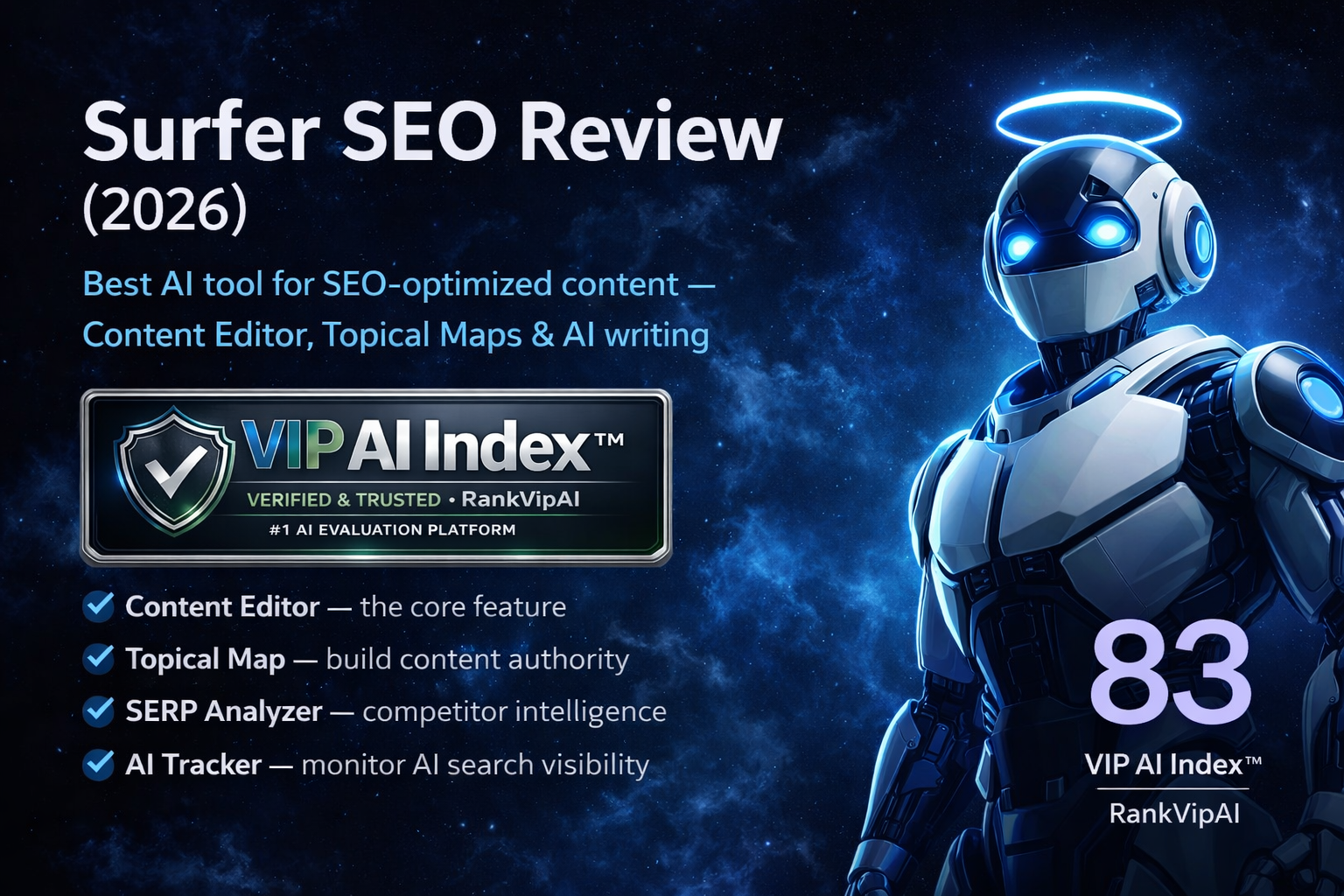
What Surfer SEO actually does
Surfer wins when the real problem is content execution: what to publish, how to structure it, how to improve it, and how to make it more visible in both search and AI answers.
More workflow modules inside Surfer SEO
Surfer SEO Review Pricing — March 2026
Surfer’s public pricing changed in 2026. The new structure lowers the entry point, but the most attractive AI-visibility workflows start once you move beyond Discovery.
| Plan | Price | Documents / AI prompts | AI visibility tracking | Seats / workspaces | Core workflow | Best for | Notes |
|---|---|---|---|---|---|---|---|
| Discovery | $49/mo Entry plan |
120 documents | ✗ no tracked prompts | 1 seat · 1 workspace | Content Editor, Audit, Topical Map, SERP Analyzer | Solo users getting started | Cheapest way into Surfer’s content workflow |
| StandardBest balance | $99/mo Best paid tier |
360 documents + 25 AI prompts | ✓ weekly refresh | 3 seats | Tracks ChatGPT, Perplexity, Gemini, AI Overviews, AI Mode | Serious content teams | Where Surfer starts to feel complete |
| Pro | $182/mo Agency tier |
50 AI prompts | ✓ daily refresh | 5 seats · 5 workspaces | 200 tracked pages + heavier collaboration | Agencies and multi-brand teams | Better monitoring cadence for scale |
| Peace of Mind | $299/mo Scale plan |
Unlimited documents + 100 AI prompts | ✓ daily refresh | 10 seats | 500 tracked pages + larger workflow control | Bigger editorial operations | Strongest self-serve scale option |
| Enterprise | $999+/mo Custom |
Custom | ✓ custom | Custom | Enterprise-grade needs and tailored rollout | Larger organizations | Contact sales for custom setup |
Surfer SEO vs Semrush vs Ahrefs vs SE Ranking
Surfer wins on content execution, while the others win on breadth, backlinks, or budget value. Once you stop expecting Surfer to do everything, its role becomes very clear.
| Feature | Surfer SEO | Semrush | Ahrefs | SE Ranking |
|---|---|---|---|---|
| VIP AI Index™ score | ★ 88 — VIP Pick | 94 — VIP Elite | 93 — VIP Elite | 85 — VIP Pick |
| Category rank | #3 | ★ #1 | #2 | #4 |
| Content optimization depth | ★ Best for editor-led optimization | Strong but broader suite focus | Improving, not specialized | Good value, lighter workflow |
| Backlink analysis | Limited compared with dedicated suites | Very strong | ★ Best in class | Solid for the price |
| All-in-one breadth | Content-first, not full-suite | ★ Broadest platform | SEO-focused | Balanced budget option |
| AI visibility tracking | ★ Deeply integrated into content workflow | Strong and broad | Brand Radar is growing fast | Still earlier-stage |
| Ease for writers | ★ Best for writers and editors | More dashboard-heavy | Cleaner than Semrush, less editorial | Friendly but less specialized |
| Topic clustering | Topical Map is very useful | Good breadth across strategy | Good research context | ★ Strong value for planning |
| Best fit | ★ Content teams and agencies | Full marketing teams | Pure SEO practitioners | Budget-conscious agencies |
| Main limitation | Needs a second tool for deeper SEO breadth | Expensive and can feel heavy | AI and add-ons can get pricey | Less powerful than the top three |
Surfer SEO Review Pros and Cons
Surfer is excellent at a narrow-but-important part of SEO. That focus is its biggest strength and its clearest limitation.
✓ Strengths
Surfer’s upside is clear: it gives content teams a cleaner system for briefs, optimization, refreshes, and AI-era visibility without the training curve of a broader suite.
It gives writers and SEOs a shared optimization system instead of subjective feedback loops. This is still the core reason most teams buy Surfer.
Surfer did not just bolt AI buzzwords onto the homepage. It built monitoring across the AI surfaces people actually care about: ChatGPT, Perplexity, Google AI Mode, AI Overviews, and Gemini.
They turn fuzzy “optimize for AI” advice into concrete actions inside the content workflow, making AI-era recommendations more usable for real teams.
Surfer helps teams improve existing articles without reinventing the page from scratch, which is often where content operations get the biggest return.
Topical Map makes Surfer feel less like a single-article tool and more like a strategic content platform for cluster expansion and authority building.
Compared with broader suites, writers usually become productive inside Surfer much faster because the workflow is much more focused and editorially intuitive.
The Discovery tier lowers the barrier for solo operators who previously found Surfer too expensive to sample.
Collaboration, versioning, comments, and clearer optimization logic make Surfer useful when clients need explanation and repeatable workflows, not just rankings.
✗ Weaknesses
The trade-off is obvious: Surfer gives you a sharp content workflow, but it does not try to replace the full breadth of a larger SEO suite.
You do not get Ahrefs-level link intelligence or Semrush-level marketing breadth here. Surfer is content-first by design.
Many users still pair Surfer with another platform for backlinks, competitive research, keyword databases, or heavier technical auditing.
The cheapest plan does not include tracked AI prompts, so the headline AI story really starts on Standard or Pro.
Teams that treat the content score as gospel risk producing competent but overly standardized articles.
Surfer accelerates production, but it does not eliminate editorial cleanup, brand nuance, or strategic judgment.
Technical SEOs or link builders may not get enough value from a standalone Surfer subscription if content is not the center of their work.
Public pricing is clearer now, but once you want collaboration plus AI visibility, the monthly spend climbs fast.
Surfer wins workflow points, not raw database dominance. That is a good trade-off for some teams and a deal-breaker for others.
Surfer SEO Review FAQ
Yes—if your SEO workflow is content-heavy. Surfer is most valuable for teams producing briefs, articles, updates, and optimization at scale. It is less compelling if you mainly need backlinks, PPC research, or a broad all-in-one marketing suite.
Usually no. Surfer is strongest for content optimization and AI-search readiness, while Semrush and Ahrefs go deeper into backlink intelligence, keyword databases, and broader SEO or marketing workflows. Many teams pair Surfer with one of them.
Surfer AI Tracker monitors brand visibility across ChatGPT, Perplexity, Google AI Mode, Google AI Overviews, and Gemini. It is built to show mentions, citation opportunities, and where competitors are showing up more often than you.
Surfer refreshed its public pricing and now lists Discovery, Standard, Pro, Peace of Mind, and Enterprise. So if you remember the older Essential or Scale naming, that is why current pricing pages look different.
It is enough for solo users who want a structured entry point into content optimization. But if AI visibility tracking and heavier team workflows matter, Standard or Pro are the more realistic plans.
Yes. Keyword Surfer remains a free Chrome extension, and Surfer says it is used by 700,000+ daily users. It is one of the easiest ways to sample Surfer’s ecosystem without paying first.
Yes—especially content-led agencies. Surfer is well suited for building briefs, improving client pages, producing optimized drafts faster, and showing clearer optimization logic to clients without needing a massive training curve.
Teams that need heavy backlink analysis, PPC data, deep technical auditing, or a broad executive reporting suite should look elsewhere or pair Surfer with another platform. Surfer is most compelling when content is the center of the SEO strategy.
Need a faster content optimization system?
Surfer makes the most sense when your team needs cleaner briefs, faster updates, better on-page structure, and a more practical way to connect content SEO with AI-search visibility.
Visit Surfer SEO →