Activepieces Review 2026: Best Open-Source Automation Tool?
This Activepieces review explains why it ranks #3 among AI Automation Tools in 2026. We cover open-source deployment, self-hosting, active-flow pricing, AI agents, MCP support, and whether Activepieces is the best automation platform for teams that want ownership and predictable economics.
Activepieces Review Verdict — March 2026
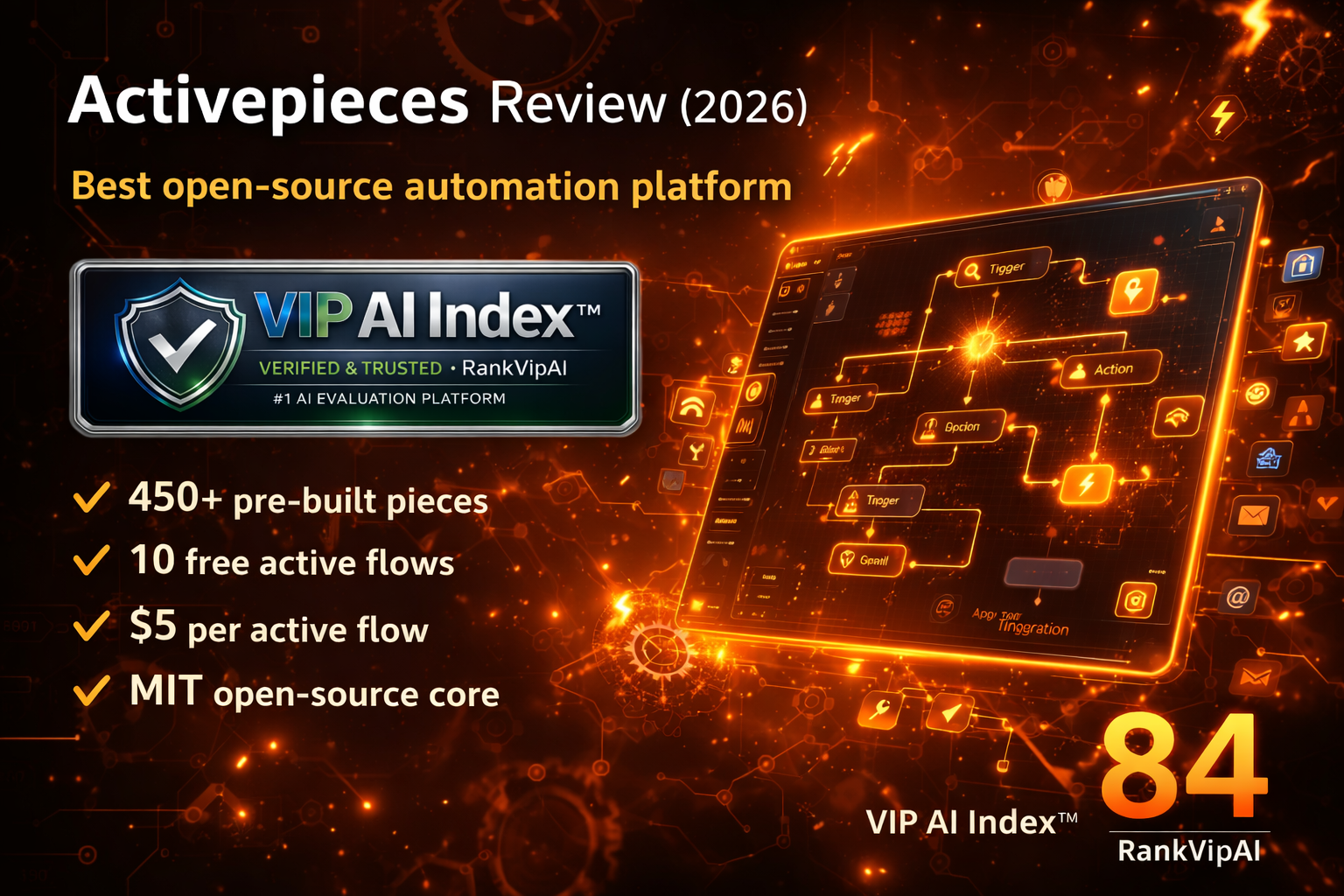
Is Activepieces right for you?
Activepieces is strongest when you want more control than typical no-code tools give you. If your main priority is pure convenience and the broadest ecosystem on day one, the tradeoff may not be worth it.
Where Activepieces fits best
Activepieces plans — verified March 2026
Activepieces is unusually clear about the value proposition. You can self-host the open-source version for free, or use the cloud plan with 10 free active flows and then pay by active flow instead of by task volume.
| Plan | Price | Credits / Limits | Best For | Key Features |
|---|---|---|---|---|
| Self-Hosted Community Open-source deployment |
Free | Unlimited runs (self-managed) | Technical teams and infra control | ✓ MIT-licensed open-source core ✓ Full deployment control ✓ No per-task cloud billing — You manage hosting, security, and scaling |
| StandardBest for most teams Cloud plan |
Free, then $5/active flow/mo | 10 free active flows | Growing teams that want predictable cloud pricing | ✓ Unlimited runs ✓ AI agents ✓ Unlimited MCP servers ✓ Unlimited tables ✓ Community support |
| Unlimited Annual contract |
Custom | Custom governance setup | Security-conscious organizations | ✓ Team & personal projects ✓ Piece access controls ✓ Global connections ✓ Custom RBAC ✓ SSO |
| Enterprise / Deployment Support Custom engagement |
Custom | Depends on deployment | Large teams with compliance requirements | ✓ Enterprise security controls ✓ Governance layer ✓ Deployment flexibility ✓ Commercial support path |
Activepieces vs top automation tool competitors
All scores from the VIP AI Index™ AI Automation Tools category, Q1 2026.
| Feature | Activepieces | Zapier (#1) | Make (#2) | Bardeen (#4) |
|---|---|---|---|---|
| VIP AI Index™ Score | ★ 84/100 | 93/100 | 90/100 | 81/100 |
| Starting Price | ★ Free self-hosted ✓ | $20/mo | $9/mo | $10/mo |
| Cloud Pricing Model | ★ $5 per active flow ✓ | Task-based | Credit-based | Seat / plan based |
| Free Tier | ★ Yes | ✓ Yes | ✓ Yes | ✓ Yes |
| Self-Hosted Option | ★ Yes | ✗ No | ✗ No | ✗ No |
| Best For | Open-source automation | Largest integration library | Visual workflow complexity | Browser-based automation |
| Best Buyer Type | Technical teams, startups, internal ops | Non-technical business teams | Agencies, ops teams, process builders | Browser-centric automators |
| AI / MCP Direction | ★ Strong ✓ | Good | Good | Moderate |
Activepieces' biggest strengths and weaknesses
The short version: Activepieces wins on ownership, pricing logic, and open-source flexibility. It loses on maturity, breadth, and beginner polish.
✓ Strengths
Activepieces stands out because it combines open-source control, better long-term pricing logic, and a more modern AI direction than many incumbents in the automation market.
Self-hosting and inspectable architecture make Activepieces stand out immediately from closed competitors. That ownership story is one of its clearest strategic advantages.
Charging by active flow instead of by task count can make real production usage far cheaper than legacy automation pricing. That matters a lot once workflows scale.
AI agents, MCP support, custom code, and AI-first workflow design give it a much more modern feel than many older automation tools that still feel mostly app-to-app.
Community contribution is a real advantage here, especially for teams that want to extend the platform instead of waiting on a vendor roadmap.
It is one of the few tools in this category that can work for both pragmatic no-code teams and more technical product or operations teams.
✗ Weaknesses
The trade-off is clear too: Activepieces is powerful and flexible, but it still trails the biggest incumbents in polish, ecosystem depth, and pure first-time simplicity.
The gap is no longer extreme, but buyers who need the broadest ecosystem may still feel it. That alone can determine tool choice for some teams.
The product experience is solid, but it is not yet the easiest or most refined interface in the category. Simplicity-first buyers may still prefer Zapier or Make.
Free infrastructure control sounds great until someone on your team actually has to own maintenance, upgrades, and security. That overhead is real.
Compared with top incumbents, there are fewer plug-and-play resources and fewer external specialists. That can slow adoption in less technical organizations.
The product is moving up-market, but some conservative organizations will still default to more established vendors with larger ecosystems and longer enterprise histories.
Frequently asked questions about Activepieces
Yes, in two important ways. You can self-host the open-source version for free, and the cloud product also starts free with 10 active flows before paid usage begins.
Because the ranking looks at the whole buyer experience, not just philosophy. Zapier wins on ecosystem breadth, and Make wins on visual workflow maturity. Activepieces wins on flexibility and pricing logic.
Yes. Activepieces is leaning heavily into AI agents, MCP, and AI-first workflows, which is one reason it stands out more than many classic automation tools that still feel mostly app-to-app.
Choose Activepieces if self-hosting, open-source transparency, or predictable flow-based pricing matters a lot. Choose Make if you want a more polished visual builder for business workflows in the cloud.
Not exactly hard, but it is less plug-and-play than Zapier. The product makes more sense for users who are comfortable learning workflow logic and making a few architecture choices.
Try Activepieces free and build one useful internal flow
The fastest way to judge Activepieces is to automate one repeated ops task, then decide whether the open-source control and pricing model are more valuable to your team than a more polished closed platform.