Synthesia Review 2026
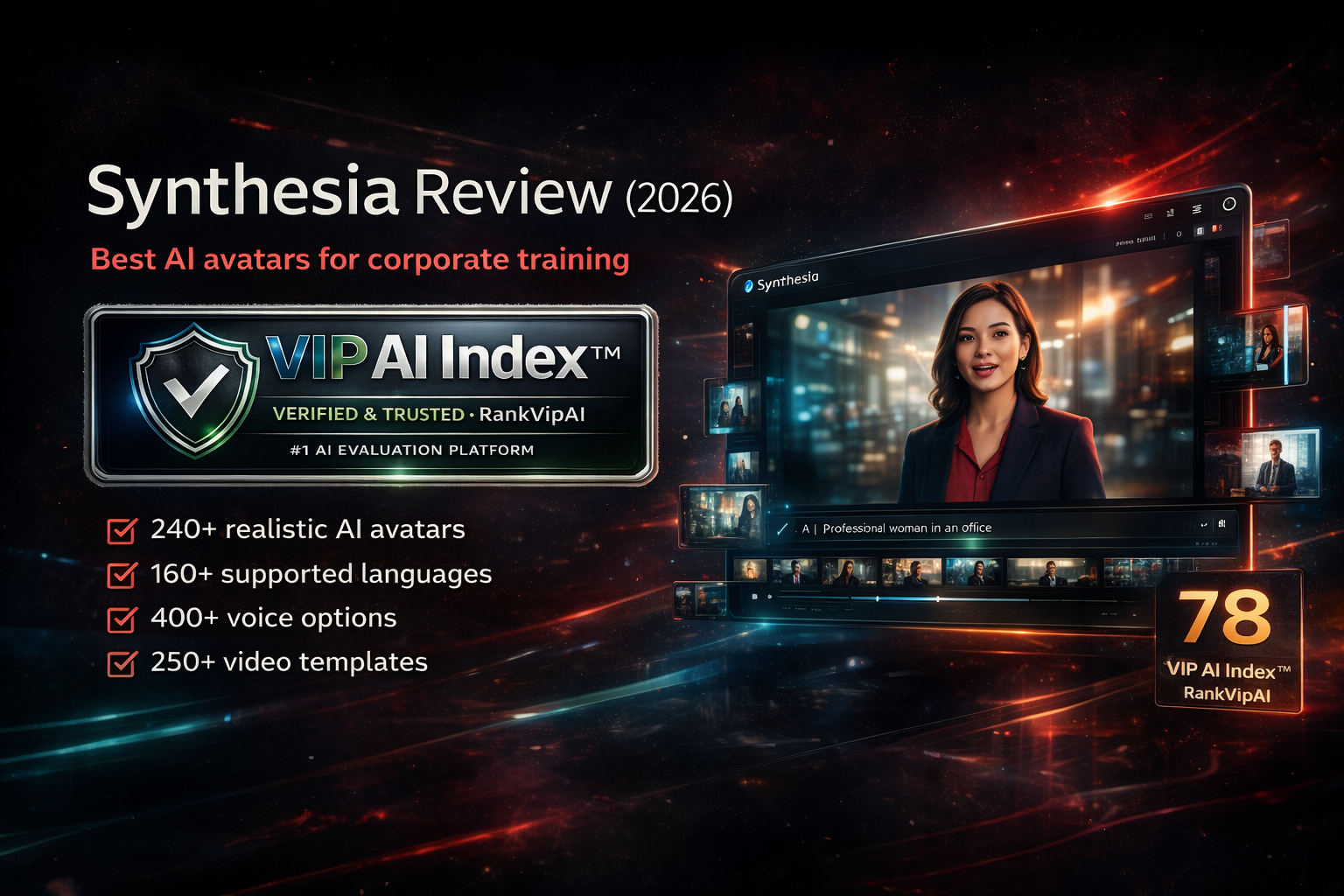
240+ realistic AI avatars speaking 160+ languages. Express-2 avatars add full-body language, while templates, digital twins, and localization workflows make Synthesia one of the strongest platforms for corporate training, onboarding, and internal communications at scale.
Synthesia Review Verdict — March 2026
What Synthesia actually does
AI avatars, multilingual voiceovers, corporate templates, digital twins, and enterprise training workflows — all inside one platform designed for scalable internal video production.
Synthesia Pricing — March 2026
Minute-based pricing with a real free plan for testing. Enterprise unlocks the full workflow with unlimited minutes and advanced organizational controls.
| Plan | Price | Video Minutes | Avatars | Commercial | Best For |
|---|---|---|---|---|---|
| Basic (Free) | $0 | 36 min/year (~3/mo) | 9 stock | No + watermark | Testing |
| Starter | $18/mo annual / $29 monthly |
120 min/year (10/mo) | 60+ stock | ✓ Yes | Individuals |
| CreatorPopular | $64/mo annual billing |
360 min/year (30/mo) | 90+ stock | ✓ Yes + API | Teams |
| Enterprise | Custom | Unlimited | 240+ all avatars | ✓ Yes + SSO | Organizations |
What works and what does not
Synthesia is strongest when the goal is scalable corporate video production. The trade-off is that it feels much more enterprise and informational than creative or emotional.
✓ Strengths
The platform stands out for avatar quality, multilingual localization, and enterprise readiness. For internal communications and training, the operational efficiency is its biggest advantage.
Avatar quality is the clearest reason to choose Synthesia. In testing, the stock presenters land around 85–90% convincing, while Express-2 improves realism further with full-body delivery and synchronized body language.
One-click translation is a major advantage for global enterprises. Multilingual versions that would normally require long manual editing workflows can be produced in minutes instead of days.
SOC 2 Type II, GDPR compliance, SSO, LMS integration, and SCORM export support make Synthesia much better aligned with regulated training and internal communication use cases than most creative AI video tools.
Fortune 500 training teams report major production savings because studios, actors, filming schedules, and reshoots are removed from the workflow. That efficiency is where the tool earns its enterprise value.
Existing presentations can be turned into narrated video quickly, with speaker notes becoming scripts and much of the original design structure preserved. That makes Synthesia especially practical for internal teams with existing decks.
Access to Veo 3.1 and Sora 2 inside the platform gives teams more flexibility for generating supporting scenes and assets, pushing Synthesia beyond a basic avatar-only product.
✗ Weaknesses
The weaknesses are mostly about fit. Synthesia is excellent for structured enterprise use cases, but less compelling for solo creators, ad buyers, and storytelling-heavy video work.
Pricing rises quickly once you move beyond testing. Custom Studio Avatar workflows can cost around $1,000/year, and enterprise pricing is custom, which usually means a meaningful step up for smaller teams.
Even though the avatars are realistic, they still lack nuanced emotional expressiveness. That makes them better for informational delivery than persuasive marketing, character work, or emotionally rich storytelling.
Stock avatars come with licensing restrictions for paid advertising and broadcast use. That limits the platform’s usefulness for performance marketers or brands producing ad-heavy video campaigns.
Some users report videos being approved and later flagged, while medical or scientific content can run into moderation friction. The appeals process is not especially transparent, which can be frustrating for teams with time-sensitive workflows.
SCORM exports, advanced translation workflows, and other enterprise functions are reserved for higher tiers, which can push mid-sized organizations into more expensive plans sooner than expected.
Synthesia is fundamentally built for corporate communication, training, onboarding, and internal use. It is not the right tool for entertainment-first video, cinematic narrative work, or more experimental creative formats.
Frequently asked questions
Yes. Synthesia has a Basic free plan with 36 minutes of video per year, around 3 minutes per month, plus 9 stock avatars and access to AI Playground. Videos are watermarked and not licensed for commercial use, so it is best for testing the platform before upgrading.
They are among the most realistic in the category. Real-world testing places them around 85–90% convincing, and Express-2 avatars improve the effect with full-body visibility and more expressive synchronized body language.
A custom digital twin is an AI avatar based on a real person, such as yourself or a company executive. Annual paid plans can include a personal avatar, while higher-end Studio Express workflows cost extra and enterprise customers can unlock broader access.
Synthesia is stronger on avatar realism, enterprise security, SCORM workflows, and corporate training use cases. HeyGen is generally more flexible for marketing-style content and broader creative use. Synthesia is the better fit for L&D and HR; HeyGen is often the better fit for promotional video work.
Only in a limited way. Stock avatars have restrictions around paid advertising and broadcast usage, and the overall product is much more tailored to internal communication, training, onboarding, and corporate education than to high-volume ad production.
AI Playground is a 2026 feature available across plans, including the free tier. It gives users access to tools like Veo 3.1 and Sora 2 inside Synthesia so they can generate supporting video assets and place avatars into different scenes, outfits, and environments.
Enterprise AI video at scale
240+ avatars. 160+ languages. Used by Zoom, Heineken, and Bosch. Try Synthesia free today.
Try Synthesia Free